MOTIVATION

What is orthorexia nervosa? Orthorexia nervosa is a condition that includes symptoms of obsessive behavior in pursuit of a healthy diet. This obsessive behavior to become healthy is actually very dangerous to the body, so people who are motivated to be excessively healthy are not very healthy after all. Some of the standards of orthorexia nervosa are found in this article: http://www.orthorexia.com/orthorexia-proposed-formal-criteria/. Some of the standards include: (1) Violation of self-imposed dietary rules causes exaggerated fear of disease, sense of personal impurity and/or negative physical sensations, accompanied by anxiety as well as shame, and (2) Positive body image, self-worth, identity and/or satisfaction excessively dependent on compliance with self-defined “healthy” eating behavior. Besides understanding some of the criteria for orthorexia nervosa, this column is a good way to define the boundary between eating healthy and having a mental disorder because these standards I just discussed is not normal for just eating healthy these standards of orthorexia nervosa play a psychological role in the human body.


There are two other sources that also discuss orthorexia nervosa: http://abcnews.go.com/Health/obsession-healthy-eating-dangerous-risk/story?id=26866895

& http://www.cnn.com/2014/10/07/health/orthorexia/. Both of these sources are very credible because they are well known American network news channel whose info are usually trustworthy, up to date on current events, and supported by many individuals. The ABC News article talks about a woman, Jenni Victor, who has orthorexia nervosa, how it has affected her body, including not having a period in over a year, along with a video of that woman as well. The CNN talks about a woman named Ashely Bailey who also has orthorexia nervosa, professors who have heard of her and discussed her problem, as well as discussing orthorexia nervosa in general.


The message of these articles is that why eating healthy is good, compulsively eating healthy is bad for a person’s health, and because of this these sources add to my opinion that orthorexia nervosa is a disorder. Before I end this blog post here is a fun fact, the name orthorexia nervosa literally means ‘a fixation with righteous eating.’


Works Cited


Chang, Juju, Chris James, and Lauren Effron. “When an Obsession With Healthy Eating Becomes a Dangerous Risk.” ABC News. ABC News Network, 13 Nov. 2014. Web. 9 Apr. 2017. <http://abcnews.go.com/Health/obsession-healthy-eating-dangerous-risk/story?id=26866895&gt;.

“Orthorexia: Proposed Formal Criteria.” Orthorexia. N.p., 26 Dec. 2015. Web. 9 Apr. 2017. <http://www.orthorexia.com/orthorexia-proposed-formal-criteria/&gt;.

Richards, Sarah Elizabeth. “Orthorexia: When Healthy Eating Becomes an Obsession.” CNN. Cable News Network, 12 Oct. 2014. Web. 9 Apr. 2017. <http://www.cnn.com/2014/10/07/health/orthorexia/index.html&gt;.


I Can Be My Motivation

Motivation is not an easy thing to obtain. It is hard enough to find motivation when you are not in the mood or when you are in a sub-optimal situation. And as it turns out, it often seems that keeping the motivation going is even harder to accomplish. In times of extreme difficulty and stress, I often find myself in a state of hopeless- if I were to personify my life, my life would be one that lost her balance and fell into a well-camouflaged cliff- and every time she tried to climb out and the light on the top of the hole seems to be close, my life just loses her grip and falls right back done.

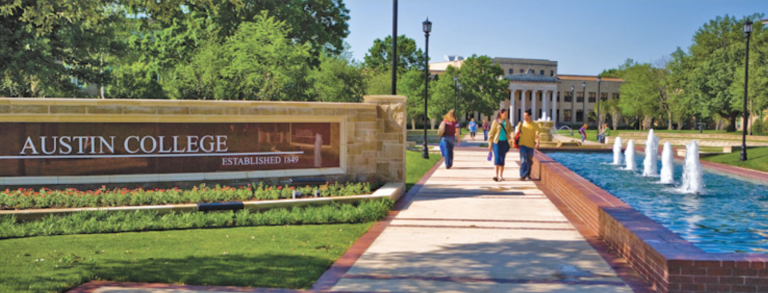
Thus, I seriously am in need of some strong motivation. Two theories of motivation that could help me rediscover my purpose and passion for learning and working, are incentive motivation and hierarchy of needs theories. Thinking back, I once did seek out these motivators when applying and making my choice in attending Austin College. The most basic and surface theory I feel, is the incentive motivator. I was really drawn to Austin College because of its prestigious pre med program. The beautiful image of becoming a medical doctor and redeeming myself; taking this second chance to show the world and myself that I could make something of myself and that my intrinsic reward would be the pure satisfaction that I made something of myself in the eyes of others as well as to myself. The extrinsic reward was also one of little importance now thinking about it: the prospects of wearing a fancy lab coat and strutting around in whatever cute outfit I would like; so, looking cute while saving lives.  Another theory that led me to my current school, is the arousal theory. Again, it was the fantasy of becoming a doctor, telling myself that college would be a fresh start and that if I desired it, I could become a great success of a student. Thinking about doing well in school, getting all A’s and getting into medical school used to give me pleasing feelings.

I feel as if I should change my incentive motivation into something new. My new driving mindset could be the desire to attain the extrinsic reward of seeing myself improve- not so much as focusing on the grades that get better, but by my work ethic, responsibility, study methods, and outlook on life. I would continue to do this, while getting other extrinsic motivators such as praise and reassurance from my caring professors. I should set my goal in mind and reflect on my actions and see if they are bringing me closer to my goal every single day. The arousal theory could be modified and used in part of my path to success. I would try to be more “aroused” by obtaining new knowledge and be excited as I learn something new. I will try to write down something new I learned and make sure I do learn something new every single day. I will try to get to the point where my goals are about obtaining knowledge and try to make studying and reading fun for myself. As I see my grades improve and my understanding expand, hopefully, my arousal levels will increase and my motivation to work hard will never stop, but instead, continue and lead to actions that will give me great success and happiness.


Motivation

Undoubtedly, many Austin College students feel the ups and downs of motivation. As said in the description of this proposed blog, “motivation is not a stable force”. I believe that I inquire much of my motivation in school from the Incentive Theory; whereas, my behavior is motivated by intrinsic or extrinsic rewards. My external award for attending Austin College is getting my degree from here and receiving a good job in the future. My internal award is taking in the satisfaction of all the hard work paid off when receiving my diploma and future job. I chose Austin College because of the endowing opportunities the school gives out later in life, as well as being given the chance to compete in NCAA DIII softball. Some key principals of motivation that are able to be applied to classes would to be to keep in mind the motivations that are provided by our own well-being or state of mind, our external and internal motivators around us; in other words, we need to keep our multitude of motivations in check in order to complete the hierarchy of needs.


Motivation

My motivation to attend Austin College was that I wanted to go to a college where I could become a successful person and be able to have a high education. Since I’m the first member of my family to go to college I’ve decided that I worked hard through my high school years to get to where I am and I want to show everyone in my town that I made it to a college with a lot of prestige and honor.I want to be successful, because I want to help the people struggling in life to live a descent life by giving back to my family and community.Being successful and working hard is the incentive theory of motivation since that kept me motivated into going to this college by giving my full effort and having the desire to want to keep moving forward. The giving back to my family and the community is related to the hierarchy needs theory of motivation since it is part of the need to feel secure and stable and self actualization. The intervention to keep me motivated until I graduate is the achievement of earning a degree and being the first in my family to graduate college. Giving up is not an option for me so I must stay focus in my goals by being determined to always give my full effort through my years at Austin College.


Motivation

We can use motivation to push through the tough times by giving ourselves the building blocks of a foundation to rest upon. If we go without motivation or without anything to work towards our determination to work toward our previous goals are lost. By using motivation we constantly have something to strive for making the work seem more worth it in the long run.

In terms of what drove me to Austin College, I would definitely have to say most of the reasons fell into the acquired needs category. For me a big part of my motivation require extrinsic motivation (Football rings, a promise of a masters degree in education, and a step forward in the job process when concerning first look schools). The schools main hook line and sinker for me was the promise of half of my fees paid for every year in relations to a scholarship. This made the money hungry side of me come out and take the offer right away being it was the best money payment system combined with education I was offered. Another reason I decided on Austin College involved that of the Self Determination Theory. This theory involves my willingness to be in control of my life and have the internal strength to believe I could succeed in anything I wanted to do. With this theory in mind the school offered a chance at a 4 and a half year masters program to those who were considering the education field. When I was presented with the opportunity of a masters degree, my internal drive never thought for a split second I would not be able to achieve this. In fact my mind went into a stage of thinking this was a way to prove anyone who had ever doubted me, wrong. I knew in my head I was capable of achieving what I set my mind to.

Dear future self,

Keep on the path that you chose to follow involving the self determination model. All the extrinsic awards you sought out to begin with may seem nice now, but having the ability to put your mind to something and stick to it will be very valuable in the coming years.

When you find yourself falling off I need you to remember the reason you chose Austin College, the opportunity it provided for you. This is your chance to earn the diploma that will enable you to pursue your dreams and letting the pressure of college get to you is not a valuable excuse. When you find yourself in trouble, refer back to this paper and remember your self determination reasons for attending here in the first place.


Week 11 First Impression- Motivation

When the time came to begin searching for colleges, I had a few basic criteria. The school had to have a great pre-med track/program, it had to be reasonably close to home, they had to offer me a good financial aid package, and it had to be a place where I felt truly welcomed.

I am actually from Sherman so I never really considered Austin College since I had always thought about moving away to a bigger city. Therefore, I visited multiple schools always taking note of the distance from home and the environment I encountered when I got there. By the middle of my senior year, I still had not found a school that I loved so I gave Austin College a shot. I visited the school (since I had never been on campus) and completely fell in love. What I liked the most was the warm environment. Everyone was very welcoming and since it is such a small school, I felt like I could make it my home. The other schools I had visited felt so huge and I just knew I was going to get lost on campus and in the crowd and it would be much harder for me to make friends and feel at home in such a large and overwhelming place.

Therefore, I think the psychological motivation of affiliation played a very big role. I wanted to find a place where I could easily find new friends and a place where I could feel secure. I also wanted to stay close to home since I felt the need to stay connected to them. I also think my motivation is part of the Incentive Theory. Pursuing a medical career is something that is intrinsically motivating. It is something that I am passionate about and it is also something that I feel I have to do in order to meet the self-actualization and self-worth needs discussed in Maslow’s hierarchy of needs. I wanted to attend a school with a good pre-med program that would allow me to pursue my goal and meet these needs.

When motivation for schools starts to get lower, one of the things that could help would be to create incentives for myself. Establishing some incentives would create an additional extrinsic motivation to reach my goals. For example, I make daily to-do lists but sometimes I don’t accomplish everything on them simply because I’m feeling lazy. However, if I say that I will take a trip to the frozen yogurt shop if I finish all of my work, then I will be more likely to accomplish everything. Another idea that may be helpful would be to refocus on why I am in school and what I am working so hard for. I am passionate about becoming a doctor and serving others through my career. This purpose, however, can easily get lost in the midst of stressful Organic Chemistry exams and upcoming deadlines. By refocusing on this self-actualization need and the bigger purpose, I can regain my motivation to continue pushing through and make it to the end.


Motivation

I definitely have higher levels of motivation for school at different times in the school year. At the beginning of the year, I have very high motivation and want to get good grades to have a high gpa, and at this point in the school year, I have an all time low in motivation. Right before finals and when the weather is getting warmer, I find it really easy to slack off. I came to this school because I wanted to have a good education with a high focus on academics and also be able to play volleyball.

          The incentive theory of motivation explains my motives to come to Austin College pretty well. According to the incentive theory, we are motivated to do things by external incentives. In other words, we are externally motivated. This means that external stimuli or outside events influence how we behave. I think I came to Austin College because I wanted to get a good degree and then eventually earn enough money to support myself. This is an example of a secondary incentive, as money is rewarding because I have associated it with other rewarding things, such as food. Food itself is a primary incentive, since no one needs to be taught that food is rewarding and is a biological need.

          Maslow’s hierarchy of needs can also be used to explain my desire to attend AC. Maslow places basic human needs in the order they need to be fulfilled. First are physiological needs, followed by safety needs, belonging and love needs, esteem needs, and finally, self-actualization needs. Since my physiological needs, safety needs, and belonging and love needs were taken care of by my family, going to school may be a way to secure these needs by myself. By having a college degree, I will (hopefully) be able to secure my basic needs and work towards self-actualization.

          Since I am planning an intervention to help keep myself motivated until graduation, I will use incentive theory and Maslow’s hierarchy of needs to help stay focused on why I came to AC in the first place. Whenever I feel unmotivated, I will focus on my law school application and eventual career. This will help me motivate using external incentives. I will also bribe myself to complete assignments using incentives, such as breaks or snacks. I will also use the hierarchy of needs to remind myself that if my physiological and safety needs are not met if I don’t get a degree, I will never be able to focus on higher needs such as esteem and self-actualization needs. If I can associate eventual happiness with success in school, I should be able to motivate myself enough to reach graduation!


First Impression- Motivated by AC

I was motivated to come to Austin College because I felt it was where I could optimize my  success. The potential to study abroad as well as be well-equipped for my application process to medical school also fed into my motivation to come to Austin College. Furthermore, I want to have a comfortable life with a family and I need a stable career to do so and came to Austin College, as a step towards that career. The study abroad factor is related to the incentive theory of motivation in that the possibility of going to another country motivated me to come to this school. The ability to immerse myself in social settings can be seen as an intrinsic motivation factor that led me to come to this school. Thr hierarchy of needs theory focuses on meeting basic biological needs such as eating and drinking first, before acting on desires. My desire to live a comfortable life is a motivation factor that fits into this hierarchy of needs theory. An intervention for me to maintain my motivation for earning my degree at Austin College is focused on the psychologically motitvating factor of achievement. Setting goals and consistently achieving those goals will help me stay motivated in my years here at Austin College.


Motivation

Screen Shot 2017-04-09 at 8.49.35 PM

There are so many ways that ones motivation level could go up or down. For me, certain times of the year and the classes I’m taking influence my motivation level. I wanted to come to Austin College for a couple reason, some reasons were more practical while other reasons were a bit more thought out. Austin college for one, is very close to my home which is only 45 minutes away. Another, Austin College’s acceptance rate into medical schools was very high. I saw this as the first step towards medical school, it would increase my chances in my career pathway and moreover my job satisfaction which is exactly what Herzberg’s two factor theory talks about. In his theory, certain factors causes job satisfaction while certain factors causes dissatisfaction. Secondly, I wanted to go to a school that had small class sizes I thought that Austin College would be a good fit for that. I wanted to have a proper relationship with my professors and peers, feel confident in my work, and achieve everything that I possibly could. My second reason for attending Austin College is summed-up in Maslow’s hierarchy of needs, there are 5 levels: physiological, safety, love/belonging, esteem, and self-actualization. Love/belonging talks about building friendship, esteem is to feel confident and respected by others and self-actualization is the desire to achieve everything you possibly can and be the best that you can be. These reasons quite literally sum up why I chose Austin College as my undergraduate school.

Staying motivated through one semester let alone all 4 years is difficult! To maintain motivation to succeed until graduation, I would take the help of my professors, peers, and family. My family the most, I would ask them to hold me accountable for things that need to get done. I would also do my work ahead of time so the closer a due date would come I wouldn’t be so stresses to finish and and be more motivated to do the work with my best effort. I would find students in the same classes as I am and try to study with them. All in all, I am glad that I chose Austin College as mu undergraduate school and I am hopeful that this school will prepare me for my future endeavors.


How are children effected by divorce?

Screen Shot 2017-04-05 at 1.11.10 PM

In today’s society divorce has become so common. We hear about divorce, what it seems from every few people we meet or interact with. If so many people undergo divorce, its no surprise that the children are affected too but how much are they affected… Are there long term side effects or do children come out of divorce with no effects at all? I’ll be arguing both sides of this controversial topic, if divorce is harmful for children or if children can come out of divorce without any serious consequences.

Generally, when thinking about children who underwent a divorce, its normal to think that the child could have longterm effects. Children who’s emotions are not properly dealt with during and after a divorce could potentially lead to long term negative effects that may last all through adulthood. These children could end up feeling alienated and unhappy, the mindset they previously had about a 2 parent household is lost leaving them feeling stigmatized. It is also see that children whose families had gone through divorce had a harder time getting along with their peers and ming new friends, again showing how kids could feel alienated and unhappy.

On the other hand, some suggest that children can come out of divorce without any serious consequences. Children make a rapid recovery after the “initial blow.” A study was conducted by Pennsylvania State University where they observed behaviors and emotions of children with both parents and children who have gone through divorce. They made sure to look at children of all ages. Researchers saw there were not many differences in children between intact families and families who had undergone divorce, suggesting that children handle divorce well. Another study looked at a “good divorce,” which was something that protected children from the possible negative effects of a bad divorce. They saw that the “good divorce” families had the smallest number of behavior problems. These children did not show signs of long term effects due to divorce or major behavioral or emotional problems.

After analyzing both sides of the argument, I believe that divorce does have a negative effect on children, not only at the time of the divorce but also after the divorce has finished. Of course, every divorce ranges in severity but no divorce in my opinion is a happy one. I think that the children struggle to make friends and build relationships that are a vital part of growing up and learning social interactions, thus leading to long term effects of alienation and unhappiness. I hope that every child is give the opportunity to grow up in a happy healthy environment where they have all the possibilities on enrichment.

Citations:

-Arguing that divorce is bad:

http://dc.cod.edu/cgi/viewcontent.cgi?article=1057&context=essai

https://www.ideals.illinois.edu/bitstream/handle/2142/14470/The%20Effects%20of%20Divorce%20on%20Children–2005.pdf?sequence=2

-Arguing that divorce is ok:

https://www.scientificamerican.com/article/is-divorce-bad-for-children/

https://www.ncbi.nlm.nih.gov/pmc/articles/PMC3223936/