Reflection

For my summary over the news article pertaining to whether or not firstborn children had higher IQ’s then their siblings I decided to be as straight forward as possible. I decided that, because after re-reading the news article after knowing what the research was actually testing I felt like that would be the best way to have readers be interested in it. The study itself was really well done and well thought out so I wanted to portray that it had been, but still keep to the facts and figures that came from what the research discovered. It is true that the results were not very exciting finding that siblings have about the same IQ is not going to re-imagine intelligence as we know it, but I was not going to forge results or stretch key points in the research in an attempt to play on the readers naivety. Now I did try to hook readers with the beginning albeit in a partially sarcastic way, but  felt like it was a necessary comparison  to the up beat but incorrect use that was done in the New York Times article. I did not have any real issues with leaving out data since my word count maximum was very large, so that wasn’t necessary. I did decide to cut straight to the point though, I disliked the original article getting distracted so often or going off on a tangent due to someone stating a quote and giving minimal information about it. I wanted to be very straightforward that way people who were interested in the topic could read and enjoy what was found, whereas those who were not did not have to stick around until the end. Another portion that I decided to avoid was using a lot of quotes from seemingly viable sources, I would have really enjoyed using sources such as that, but when I went to research the people quoted in news article I could not come up with anything sufficient enough to place in my article. Therefore I just decided to leave quotes out of it entirely. All in all it was fun rewriting the article, and while my skill to draw readers in and keep them there is probably insufficient compared to a professional New York Times writer or editor, I did what I believe was right and what the people would enjoy. I gave the truth no stretches or discrepancies, which is what I would have desired if I was the reader.


Research Article Summary


Birth Order and Intelligence

Breaking News! After eight long years of research over intellectual differences between siblings there is an answer. Children who are raised as the first born child have on average a 1 point difference on IQ tests compared to their siblings. These results come from a study done over a period of 8 years in Norway. In this study children were given IQ tests when they reached the age of 18. To limit any sort of social differences that the children may have had each child was from a Norwegian military family and was raised in fairly similar ways. The families were chosen at random with only one stipulation the family had to have more than one child to be applicable for this test.  However these tests were done with the idea that being a firstborn child is not necessarily due to what order you were born in. There were cases where the technical second born child was tested as a first born child due to complications in the first born child’s life that lead to premature death. The people conducting the test believed that being a firstborn child was more about the psychological standpoint rather than the physical one. In their eyes being the first born child was akin to being the teacher or the protector of your siblings that it was the natural role for the eldest child to fulfill.

Now taking all of that into account the difference does not seem very big, and it is not meant to. The findings here show that it is very unlikely that birth order correlates with intelligence. There was a much bigger difference in the scores of the firstborn children and the second born children then the difference between the two. This test does wonders in proving that it is not the biological difference between siblings that determines intelligence as well as shows that it does not correlate with the psychological viewpoint of being the firstborn child. This finding can continue the search to see what psychological factors do affect in terms of intelligence. If it is not being a firstborn child then where do the differences lie? Perhaps in how or where the children raised, maybe some parts are attributed to a natural affinity for learning that was reinforced at an early age. This research is the first step down a path that could lead to better ways of learning and why the work. This experiment could be the beginning of a journey into how people can become geniuses and use their intelligence to help others.

Resources:

News Article-http://www.nytimes.com/2007/06/22/science/22sibling.html?_r=0

Science Article-http://science.sciencemag.org/content/316/5832/1717.full


Sleep Deprivation Connecting to False Memories

Sleep Deprivation has been used in interrogation rooms for decades now, but could the confessions we get from these sleep deprived suspects being interrogated be completely false without them even knowing about it? A study over sleep deprivation by Steven Frenda and his team show that this might not be the best way to go about interrogations after all.  

False memories are when people can take in false information and mistakenly encode it into their memory instead of the original information. Sleep Deprivation has been shown to impair cognitive performance, decrease working memory capacity and interfere with normal learning experiences. 

In one test performed on students chosen randomly from a college in California, participants were asked to confirm and describe the video from the Pennsylvania plane crash on September 11th. Even though there are many pictures following the crash, the is no actual footage of the crash. The study separated the group into two halves randomly. Half were sleep deprived and the other half were well rested, both groups were carefully monitored. The next day when asked about the non-existent plane crash video, the sleep deprived group showed a significant amount of more people that had false memory of seeing this video. Another test Frenda’s team was structured by the first false memory test they did. They found enough information from the previous results that made them believe a few changes and additions could lead them to a serious breakthrough. After several alterations were made, the results once again gave data supporting sleep deprivation correlating with false memories. 

Considering the entire research, however, there were more tests results that showed sleep deprivation might not have too much to do with false memories at all. Other tests done came up with results that weren’t good enough to be deemed significant. Frenda’s and his associates performed a number of different tests but only a few came up as significant data showing that sleep deprivation connects to false memories. Does this mean that we should just back off and let sleep depriving tactics continue? 

Because of how close to “significant” results were from other tests similar to this one, it would make sense for everyone to start taking a closer look at a problem with such a terrible outcome like this one. In the whole experiment about eight different test results came through and only two of them showed connection between deprivation and false memory; that’s one out of four or 25% showing connection. That’s enough data pointed toward a need for more research in this subject. It would be wrong to say that if the majority of the data shows no correlation that the entire project is a bust. Consider how we use sleep deprivation during the questioning process in some very serious crime cases that determine weather a person will live freely or in prison for the rest of his or her life for example. In that situation, knowing that there is significant data out there showing correlation with false memories being formed, would you feel that you could count on a sleep deprived confession to tell you the truth? Is it safe to think that anything someone says or confesses to after a night or even a full day without sleep is valid for certain?  

With the small amount of information we have about sleep deprivation, it is much too early to declare a stance for or against sleep deprivation. What should be encouraged, however, is more research to be done and publicized like Steven Frenda and his team did. With answered questions, results with little to no doubt, and a large supply of test subjects and significant results, the connection between sleep deprivation and false memory can truly be identified, understood, and worked on if need be.

News article: http://www.cbsnews.com/news/sleep-deprivation-may-lead-to-false-confessions/

Scholarly article: https://webfiles.uci.edu/eloftus/Frenda_SleepDep_PsychSci2014.pdf?uniq=-olqi49

Refection 

 Writing this article definitely ended up being a little tougher than I originally thought and planned for. I feel like I now have a further understanding and more sympathy for those who do this as a career. Considering that the full research was 2 different experiment with 3 or 4 tests per experiment, I found it rather challenging to compress all the necessary information down into my 1,000-word maximum. It was somewhat stressful trying to pick and choose which large pieces of information I could and couldn’t include. Naturally I felt the need to get all the necessary information out before I started explaining and stating my claim or opinion, but I ended up being over 650 word in at the end of my “necessary information” portion. I had to stop, delete my work, and start over. I was slightly devastated, but the show must go on. I basically had to rewrite and reformat my entire article using the smallest amount of facts as possible. I had to leave out explanations of most of the experiment they performed as well as some of the definitions, terms, and reasons for different parts of these two experiments they performed. After doing this paper I give credit to any writer who is able to successfully get everything they planned for in such a tight gap of space.

 Over the duration of this project, not only did I develop a new respect for these journalists, but I also found some admiration for people who can handle the criticism and rough feedback that they receive and still want to do that job. I know that the first part of the project I thought, “This article tells me what the author is thinking but I don’t really know too much about what’s going on.” And then I got to the scholarly article portion and thought, “Wow, they left a lot of things out that are very essential to the research.” And finally there was the media production portion, this was where the moment of realization hit me. This is when I realize that everything that I’ve been saying and criticizing are the exact same problems I was having on my project but worse. It is truly an experience where you have to stop and say “Alright, now I get it.”


Can Poor Sleep Cause Weight Gain?

We have all heard of the infamous “freshman 15” weight gain from the poor eating choices to the binge drinking with friends. Today after countless research we have learned that this weight gain could be from the varying sleep patterns that these students might have.

In the Journal of Behavioral Sleep Medicine a study of 132 freshman students at Brown University kept daily sleep diaries of the times they fell asleep and the times they woke up for about 9 total weeks. At the end of this period, it was found that about half of these 132 students had already gained an average of 6 pounds each; the weight gain could have been caused from their abnormal sleeping patterns.

Researchers were confused what type of sleep these students were getting to cause them to gain this weight. Experts say that students need to be getting an average of 9 hours and 15 minutes of sleep per night, but in the study the students were averaging about 7 hours and 15 minutes per night causing them to be sleep deprived. Sleep deprived students were more likely to reach for sweeter foods due to their lack of sleep, they craved sweeter items to keep them awake and happy.

The amount of time students were spending in bed is only half the battle, the other half if the time that students went to sleep and woke up every night and morning. It was seen that the students that consistently slept and woke at the same time every day, were able to have a lesser change in their weight while the students whose sleep schedules changed on average were the ones to gain more weight. Students whose sleep schedules changed on a daily basis were pretty much dealing with symptoms of jet lag, and the more their sleep varied the more their so called “body clocks” were packing on the pounds.

Unfortunately, in this study the students did not monitor what they consumed so it was hard to pinpoint completely if their sleep was truly the reason as to why many of them gained weight. Though, habits that are developed in the first year of college are habits that stick around for a long time and take a long time to break if the habit was bad.

When the study was coming to an end, Brown University found significant gender differences; for example the highest weigh gain on the women’s side was 11 pounds while on the men’s was 18 pounds. Girls were able to keep more steady sleep schedules while boys usually had a harder time keeping consistent sleep schedules.

The reason that this study was so important was to make an emphasis for parents to create good sleeping habits while they live at home. Whatever habits that these students would make at home, hopefully they would be transferred over when the students would attend college.

Original Article: http://well.blogs.nytimes.com/2015/10/26/poor-sleep-may-spur-college-weight-gain/?_r=0

Research Article: https://msrc.fsu.edu/system/files/Holm-Denoma%20et%20al%202008%20The%20freshman%20fifteen%20the%20freshman%20five%20actually-%20predictors%20and%20possible%20explanations.pdf


I feel that is was a lot easier to write the article in much fewer words than the original writer wrote in. When the writer wrote the original entry, there was a lot of quotes that were put in and studies that were also added that I didn’t feel the need to be there as they weren’t about the main subject present, they were more there for fillers. I did though have a hard time understanding some parts of the original text in the wording that the original writer used, it took me a while to figure out how to summarize it and understand what it was talking about. It was pretty easy to distinguish between what needed to stay and what needed to be taken out in the summary that I wrote. It was also easy to word the sentences in a way that was easier for me to read, I found that a lot of the sentences in the original article were very difficult to read so when I went to write my version I changed the way that to words things to a way that might be easier for the reader.


What exactly causes obesity?

Obesity is on the rise in today’s society, especially in our very own country. Whether it be in children or the older generations, there is a mutual agreement that the quality of life of a person is dramatically changed if he/she suffers from obesity.

Various measures are taken to overcome this situation every day. Individuals may go through vigorous sessions of exercise, long durations of dieting, or even extensive methods such as gastric bypass. Even after going through all that, why do so many still suffer from obesity? It may be hard to stick to a long-term plan of diet and exercise in a time when salads are more expensive than a burger and gym memberships cost a lot more money than sitting on the couch. Whatever the reason may be, it is time that we understand that there are internal factors beyond the capabilities of an individual that could potentially affect the risk for obesity.

According to a study conducted at the Vanderbilt University School of Medicine, internal factors within an individual could be related to the likelihood of obesity. The authors, agreed, that if these factors were identified in children earlier on, there could be a higher chance of preventing obesity later on in their lifetime. Identifying the relationship between resting state functional connectivity and eating behaviors was the primary goal of the study. In order to do so, data was collected from 38 children in the Rockland Sample of Enhanced Nathan Kline Institute, ages 8-13, who were randomly selected. The fact that the Rockland Sample was representative of the U.S. population according to the 2010 census made it possible for the results of the study to be generalized to the whole U.S. population. Child Eating Behavior Questionnaire and MRI scans which assessed the inferior parietal lobe, frontal lobe, and nucleus accumbens were obtained from each child. The results showed that decreased inhibition and increased impulsivity were related to childhood obesity. Therefore, the researchers concluded that an increase in response inhibition and a decrease in impulsivity could lead to a decrease in adiposity, decrease in food approach behaviors, and an increase in food avoidance behaviors.

Dr. Cowan, from Vanderbilt University School of Medicine stated, “We think mindfulness could recalibrate the imbalance in the brain connections associated with childhood obesity.” One way of preventing obesity from childhood is mindfulness, or being in a state of mind in which the individual can assess personal thoughts or motivations, that lead to actions, from afar. Mindfulness can be a way of increasing response inhibition and decreasing impulsivity which could lead to prevention of childhood obesity. As the saying goes, “nipping it in the bud” will prevent a whole lot of havoc later on.

Sources:

Elsevier. “Brain study reveals mindfulness could help prevent obesity in children: Research links imbalance in brain connections to childhood obesity.” ScienceDaily. ScienceDaily, 21 January 2016. <www.sciencedaily.com/releases/2016/01/160121092312.htm>.


Reflection

Summarizing the entire research article to fit under 540 words was pretty difficult. My lack of knowledge in statistics and the vocabulary used in the research made it challenging to accurately portray everything the study wanted to support. In the original news article, I noticed there were many inconsistencies when compared to the study, and thus I wanted to incorporate details from the actual research which made the study a reliable source for the information given.

Compared to the news article, my summary emphasized the random sampling, as well as the ability to generalize the results to the population of the U.S. Also, in the original article, the information tried to explain how mindfulness does lead to lack of obesity. The research study, however, explicitly shows that no causality can be predicted from the results of the study. Therefore, it was my job to summarize that functional connectivity in the brain is related, to some extent, to eating behaviors, but they are not directly connected, which means it is not a direct cause.

After completing this assignment, I truly do appreciate journalists for the time and effort they invest into summarizing research studies. It is clear that they have spent hours trying to decipher the true purpose behind the research studies, but their job is to also attract readers. In order to balance the portrayal true information from the study while also engaging readers within a limited character limit is definitely not an easy job. I also believe that the readers have a responsibility to be mindful when reading such articles to know what to believe and what not to believe. It is crucial, especially in this day and age, to always have a reason why you believe the provided information, and if that means doing some research behind it, then that is what it takes to be an informed reader.


Megamind Memory

Did you know that the brain is the only organ to name itself?

It has always been known that the brain is amazing. It holds so much information. It learns so fast. To put it simply, the brain is really smart. The big question that scientist have been scratching their chins about is “how much?” Well, a recent study over memory capacity shows us evidence of just that. Researchers at Salk Institute for Biological Studies ran an experiment to measure the memory capacity of the human brain using the hippocampus of a rat.

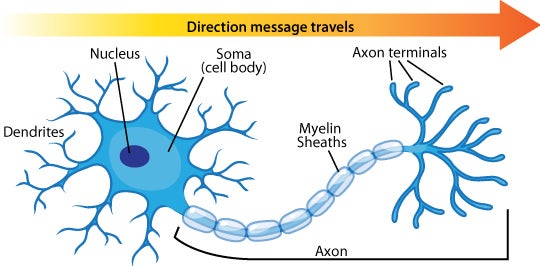
First, we will explore some background information on the brain before jumping into the experiment. The brain is made up of specialized cells called neurons that can receive and send information. Brain cells are made up of dendrites that receive signals and an axon which sends information through axon terminals to other neurons. Approximately 100 billion neurons make up the entire brain. They form a uniques system of connections known as synapses that encode, store, and retrieve information in the mind.

The experiment began with an interesting finding during the reconstruction of a rat hippocampus, a part of the brain that is deals with memory. Scientists noticed that for some neurons, the axon would form synapses with multiple dendrites of a neighboring cell. This would mean that the message being sent from sender to receiver would be duplicated, leaving the researchers to wonder if the receiving dendrites were of the same size and strength. If they were, then the information being transferred would be strong and the information would be the same. If they were different, then the information would be slightly varied, leading to a complexity of receiving different information from the same axon.

When furthering the investigation, the researchers found an eight percent difference between the dendrites, which is calculated to be approximately twenty-six new synapse sizes. This means that the variation of storage size, a 10-fold increase in storage capacity in the hippocampus, is much greater than once thought. One of the scientist, Tom Bartol, tells of how “It’s an order of magnitude more capacity than we knew was there”.

It is argued that if we can hold so much information in our brains, why do we forget things? It takes longer to store and retrieve info than it does to absorb and interpret events that occur in the world around us. It’s almost impossible to completely measure the exact amount storage space there is because of a few reasons. 1) Each individual has a different amount of space and a different pace of storing and retrieving info. 2) There is so much information absorbed that it is difficult to keep tabs on what all we take in. 3) The synapse process is so insanely quick that technology is not ready to keep up with it yet. As for the future, the Salk institute hopes to run more tests to see if there are similar pathways like the ones in the hippocampus.


In the Most Basic Terms: Genes Involving Schizophrenia

Schizophrenia is a complex, multidimensional mental disorder that affects numerous lives directly or indirectly. Like for many psychiatric disorders, no cure has been devised, and we know little about schizophrenia as a whole. One study published in the scientific journal Nature, has made an important discovery in understanding and potentially predicting the possibility of inheriting the psychiatric disorder.

In your brain, different genes play different roles in developing brain patterns and assessing the outside environment. The important gene in this study is C4, which has two variants, C4A and C4B, that have the possibility of contributing to developing schizophrenia. The development of this theory began with sampling 245 cadaver’s brain. The samples showed that individuals that had schizophrenia exhibited C4A levels in the brain that were three times as larger as people without the psychiatric disorder. Then 28,799 people with schizophrenia were compared by 35,986 people without schizophrenia. This provided evidence that people’s DNA that corresponded with the C4A protein were more likely to inherit schizophrenia. The third group, 35 schizophrenic patients and 70 without schizophrenia, were compared to measure RNA levels. C4A levels were 1.4 times greater in the schizophrenic group. The last part of the study involved the use of mice and observing the lack of the C4 protein. The lack of this protein creates the absence of another protein, C3. Without these two proteins, synaptic pruning cannot happen regularly in the brain. Synaptic pruning is essentially when the brain takes care of its nerve connections and cells, and makes stronger and healthier connections in order to function and make choices and decisions. It is hypothesized that people with schizophrenia have a type of the C4A protein that takes care of the brain too much compared to “regular brains.” Thus, their synaptic pruning misfires in their brain, and the synaptic pruning becomes too engaged with taking care of the connections and cells.

This a great advancement with schizophrenia, however, it’s one of the few studies concerning the mental disorder, especially the biological part. There haven’t been any follow-up studies, and the study does not list any complications with the work. It’s important to note it is still in no way possible to be able to fully understand or diagnose schizophrenia, for this study is one of the first of its kind, and it’s only a tiny piece on what goes on biologically in a person’s brain. There are more components at play, including environmental aspects of a person’s life. While it’s a tiny step, it’s still a step in the right direction for comprehending a psychiatric disorder that has been stigmatized and ignored for too long.

Sources used:

http://www.cnn.com/2016/01/28/health/schizophrenia-a-genetic-cause/index.html

http://www.nature.com/articles/nature16549.epdf?referrer_access_token=NUv-JSYSkBIyHjh58E17mtRgN0jAjWel9jnR3ZoTv0PL6I_-W62dZdLuYRUahyWrs-967y2G9DY0TYR1ljV7N2PBKDIeLp3tFV1-stxb1PJrfcmop4V6Xk68eLFRuQKzgc6PKimVgpuK2AqP-S114XYAiky59n9URwgb21xWqIALZ0ImiU9rjez7zZH6EvpmbFPEfjGMltfOqG7SvtMOzc7uouxIWIUNZcSWfWWoAMRQX6SQpvIKmtELsu_jsbJM&tracking_referrer=www.nytimes.com


Reflection

I picked probably the worst news article to critique and discuss. The information is important, and I enjoyed learning about it, but the article was actually well-written. The only problem that was evident in it was that the writer put too much emphasis on the mice group instead of each individual group, and the author went into more detail about what schizophrenia is, but other than that, it was a good read. I understand why she chose to do that because more people are interested in the symptoms and the overall experience of schizophrenia. I think it’s mainly because people are curious, but that’s not the point of the study, and it shouldn’t be the point of the article. It explained all over the scientific terms well, and I understood most of what the article was talking about. That being said, reading the scientific study and dissecting what it was actually saying was harder than nitpicking the news piece. There were many technical terms, and I had to touch up on biology and chemistry while reading it. Doing the critiques on both the article and study really helped me write this mock journalist piece because I had analyzed both texts three times, so I had a decent understanding of what needed to be told. This is an important study, but it’s kind of discouraging when the author has to describe the mental disorder extensively in order to get people to read and care about it, and there has to be a video included as well. I didn’t want to take away from the study’s findings with providing too much information over schizophrenia. Overall, I wish I had picked an easier article and study for the sake of my own workload, but this was an incredibly interesting study to review, and it goes to show how much effort goes into true journalism. A good article sells it to the audience, and still gives sufficient information about the study, and the author did a fairly good job of doing both.


Week 13 Blog Prompts: Social Psychology

Hand writing on a notebook

Here are the two prompts for this week. Regardless of which prompt you choose, use the tag “Social Psychology.”

Option 1

The Implicit Association Test (which can be accessed through this link) is a tool to identify biases which may be outside your conscious awareness. The results of this test cannot determine whether or not you are racist, sexist, homophobic, etc., but they are useful to help you understand yourself and how you interact with others. For this post, you must take two separate IAT tests from the link above. You do not need to share your results if you don’t want to, but you need to talk about the experience of taking the test and getting the results, comment on whether or not the results were surprising, and discuss how this test can be useful for college students or your future career.

Option 2

Would you enjoy a boring task more if I gave you $1 to do it or $20 to do it? Many of you will probably say you’d rather than the $20, but research suggests you will probably enjoy it more if I only give you a single dollar. Watch this footage to see:

Describe a time in your life when you think you experienced a change in beliefs due to cognitive dissonance, and argue whether you think this is a good thing we should promote and utilize or a bad thing we should try to avoid.

I look forward to seeing what you write!

Header image: CC by Flickr user Caitlinator

Finals are coming up, learn how to study without being distracted here!

Does multitasking affect academic performance? A study done in California has answered this and more! The leading question was how differently do  younger generations task-switch in comparison to older generations and how does this difference play in to student’s performance in school. To figure this question out, a study was created to watch around 300 students from  junior high to college age study in their homes or usual environments and see how often they switched between tasks. There are three things that impact task switching, primary task completion, secondary task completion and resumption lag. A separate study found that if the primary task and secondary task are very similar, you will perform worse on the primary and the more concentration you put into the second task, the longer your resumption lag to the first task is as well.

These were the results of the experiment. First, it was established that each age group had their own different kinds of distractions. For the kids in junior high it was video games, high school students were mostly likely to be distracted by texting, and the college students applied more study strategies. The students who were similar in on-task percentage and run length, tended to use technology in the same ways and their preferences for multitasking were akin. The study pointed out that those who preferred to multi-task had much shorter on-task runs than those who didn’t. As for how this affects students academically, the students who used Facebook at least one time during class or study sessions, had lower grades than the students who applied study strategies. Surprisingly, every student of the study was able to only remain on-task for an average of about 6 minutes before switching to another task.

How do we resolve this generations issues with multitasking? We are given three suggestions to help deal with multitasking while studying. The first is an oldie but goodie, teachers and parents are advised to allow students to listen to music while studying. The more familiar the music, the more minor the impact on resumption lag and task-switching there is. Our second piece of advice is to let students use their phones or other technological devices for a 1 minute “technology break,” then follow that up with 15 minutes of uninterrupted study or lesson time. Because they know that they will be allowed to use their devices in 15 minutes, this will allow the students to remain focused on the task at hand instead of constantly thinking internally about checking their phones. The third and final option mentioned in the study is to sharpen your metacognitive skills. By choosing a time, say during a lecture that you believe less important information is being given, to take a break and check your device, you are less likely to be distracted during something important. Much unlike students who allow themselves to be distracted every time they receive a notification. By applying one or a combination of these tricks to your study sessions or classroom, you can improve learning.

Reflection:

Writing a news piece over a scientific study is quite difficult. Doing this project has made me want to take back everything I said in my news article critique. The hardest part for me was trying to write for an audience that hasn’t read the journal. I really had to think, “Would I understand this if I had not already read about the study?” I’m sure I didn’t catch everything, but I tried to make my piece as accessible as I could without sounding condescending. As you can probably guess, the second hardest part was picking out what information to include and what information to discard without changing the results or fibbing about the study. Although I told myself that I wouldn’t, I decided to leave out the limitations of the study. They take quite a bit away from the results and, in my opinion and like we hear in class, it just makes the news article much less “sexy.” My article is a bit shorter than the original one because I didn’t write about the second study in which psychology students had to answer text messages while watching a video and were tested on the material afterward. That is because the journal, although suggesting that we use our metacognitive skills, barely mentioned this experiment and I felt like I didn’t have enough information about it to put it in my piece. This project has definitely taught me that I should be more cautious about what I read in the news, but I should also give authors a break because their job is not as easy as it seems.

Link to the news article:

https://www.psychologytoday.com/blog/rewired-the-psychology-technology/201204/attention-alert-study-distraction-reveals-some

Link to the journal:

http://www.csudh.edu/psych/facebook_and_texting_made_me_do_it-media-induced_task-switching_while_studying-compuers_in_human_behavior-2013-rosen_carrier_cheever.pdf


Media Production: Happiness Does NOT Increase Life Span

Fact or myth: happy people live longer than sad/unhappy people? Myth. The Million Women Study, directed by Dr. Bette Liu, wanted to find whether or not happiness has a direct association with mortality. Prior to the research and study, researchers already knew poor health leads to both unhappiness and then to potential death. They knew unhappiness could be a result of other factors which can also cause mortality. After analyzing previous findings and learning of myths regarding happiness and mortality, the researchers’ main goal was to determine if, after consideration for the poor health and lifestyle of people who claim to be unhappy, any strong evidence shows happiness directly reduces mortality rates.

Dr. Liu selected 719,671 to participate in the study and asked them to rate their happiness, stress, feelings of control, and whether or not they felt relaxed. Researchers analyzed the women who died before Jan 1, 2012 from various causes. Using Cox Regression, a method for researching the effect of multiple variables upon the time a specific event happens adjusted for self-rated happiness, mortality rate ratios comparing mortality in women who said to be unhappy with those who said to be happy most of the time were calculated. 39% of the women said they were happy most of the time, 44% said they were usually happy, and 17% unhappy. 10 years after the survey was taken, a follow-up on the women was completed, revealing 4% of the women died. Poor health was strongly associated with unhappiness. But, after consideration for self-rated health and lifestyle factors (smoking, deprivation, and body-mass index) unhappiness was declared to be dissociated with mortality from all causes.

From the study the researchers interpreted and concluded good health and well-being can mean both happiness and longer life, as poor health can mean both unhappiness and a shorter life. But, happiness does not directly reduce chances of cancer, cardiac, or mortality in general. The study used a single question with three possible answers to guide their research, while other, similar studies use different methods. Different people researching the same topic can come to various conclusions. Other studies with a different outcome may be confused with cause and effect. In this particular study, poor health was the cause of unhappiness, while in other studies they might believe the cause and effect is the opposite.

Original News Article: http://www.latimes.com/science/sciencenow/la-sci-sn-happiness-death-20151209-story.html

Scholarly Article: http://www.thelancet.com/journals/lancet/article/PIIS0140-6736%2815%2901087-9/fulltext


Reflection:

Summarizing the news article was not necessarily challenging for me. In the first assignment, I critiqued Karen Kaplan, author of the news article, somewhat harshly because of her extreme lack of detail and shortness of her post. In my own post I tried to avoid the same issue (lack of detail) by adding more statistics, more information of the process, and more details of the results. Because her article was so short, I was not challenged with meeting the word count, but I had more difficulty staying inside the word count. In order to get the most valuable information, such as statistics, factors going into the study, etc. written, I cut out most of the random sentences she had used in the news article regarding information not pertaining to the results of the study, or the study in general.

The series of projects taught me about the trustworthiness of news reporters or news articles. When I read the news article, I did not have any red flags, nor did I think anything of the lack of detail or information until I read the actual scholarly article. Writing the first two papers allowed me to compare and contrast both pieces in depth, enabling me to see Kaplan missed a large amount of important information which did not allow her readers to be informed of details from the study. I am not sure if other people came across the same realization when looking at their own articles, but when looking at any sort of news article, anyone should use caution.