Motivation

We can use motivation to push through the tough times by giving ourselves the building blocks of a foundation to rest upon. If we go without motivation or without anything to work towards our determination to work toward our previous goals are lost. By using motivation we constantly have something to strive for making the work seem more worth it in the long run.

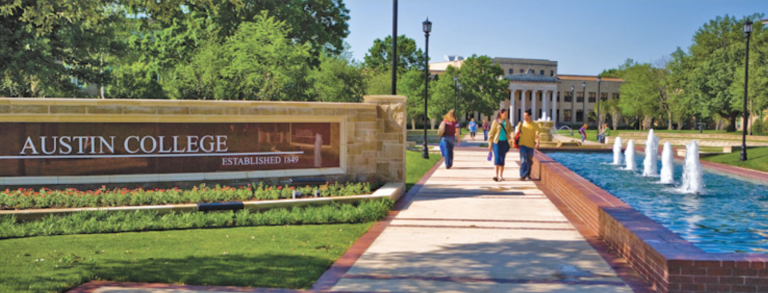
In terms of what drove me to Austin College, I would definitely have to say most of the reasons fell into the acquired needs category. For me a big part of my motivation require extrinsic motivation (Football rings, a promise of a masters degree in education, and a step forward in the job process when concerning first look schools). The schools main hook line and sinker for me was the promise of half of my fees paid for every year in relations to a scholarship. This made the money hungry side of me come out and take the offer right away being it was the best money payment system combined with education I was offered. Another reason I decided on Austin College involved that of the Self Determination Theory. This theory involves my willingness to be in control of my life and have the internal strength to believe I could succeed in anything I wanted to do. With this theory in mind the school offered a chance at a 4 and a half year masters program to those who were considering the education field. When I was presented with the opportunity of a masters degree, my internal drive never thought for a split second I would not be able to achieve this. In fact my mind went into a stage of thinking this was a way to prove anyone who had ever doubted me, wrong. I knew in my head I was capable of achieving what I set my mind to.

Dear future self,

Keep on the path that you chose to follow involving the self determination model. All the extrinsic awards you sought out to begin with may seem nice now, but having the ability to put your mind to something and stick to it will be very valuable in the coming years.

When you find yourself falling off I need you to remember the reason you chose Austin College, the opportunity it provided for you. This is your chance to earn the diploma that will enable you to pursue your dreams and letting the pressure of college get to you is not a valuable excuse. When you find yourself in trouble, refer back to this paper and remember your self determination reasons for attending here in the first place.


Week 11 First Impression- Motivation

When the time came to begin searching for colleges, I had a few basic criteria. The school had to have a great pre-med track/program, it had to be reasonably close to home, they had to offer me a good financial aid package, and it had to be a place where I felt truly welcomed.

I am actually from Sherman so I never really considered Austin College since I had always thought about moving away to a bigger city. Therefore, I visited multiple schools always taking note of the distance from home and the environment I encountered when I got there. By the middle of my senior year, I still had not found a school that I loved so I gave Austin College a shot. I visited the school (since I had never been on campus) and completely fell in love. What I liked the most was the warm environment. Everyone was very welcoming and since it is such a small school, I felt like I could make it my home. The other schools I had visited felt so huge and I just knew I was going to get lost on campus and in the crowd and it would be much harder for me to make friends and feel at home in such a large and overwhelming place.

Therefore, I think the psychological motivation of affiliation played a very big role. I wanted to find a place where I could easily find new friends and a place where I could feel secure. I also wanted to stay close to home since I felt the need to stay connected to them. I also think my motivation is part of the Incentive Theory. Pursuing a medical career is something that is intrinsically motivating. It is something that I am passionate about and it is also something that I feel I have to do in order to meet the self-actualization and self-worth needs discussed in Maslow’s hierarchy of needs. I wanted to attend a school with a good pre-med program that would allow me to pursue my goal and meet these needs.

When motivation for schools starts to get lower, one of the things that could help would be to create incentives for myself. Establishing some incentives would create an additional extrinsic motivation to reach my goals. For example, I make daily to-do lists but sometimes I don’t accomplish everything on them simply because I’m feeling lazy. However, if I say that I will take a trip to the frozen yogurt shop if I finish all of my work, then I will be more likely to accomplish everything. Another idea that may be helpful would be to refocus on why I am in school and what I am working so hard for. I am passionate about becoming a doctor and serving others through my career. This purpose, however, can easily get lost in the midst of stressful Organic Chemistry exams and upcoming deadlines. By refocusing on this self-actualization need and the bigger purpose, I can regain my motivation to continue pushing through and make it to the end.


Motivation

I definitely have higher levels of motivation for school at different times in the school year. At the beginning of the year, I have very high motivation and want to get good grades to have a high gpa, and at this point in the school year, I have an all time low in motivation. Right before finals and when the weather is getting warmer, I find it really easy to slack off. I came to this school because I wanted to have a good education with a high focus on academics and also be able to play volleyball.

          The incentive theory of motivation explains my motives to come to Austin College pretty well. According to the incentive theory, we are motivated to do things by external incentives. In other words, we are externally motivated. This means that external stimuli or outside events influence how we behave. I think I came to Austin College because I wanted to get a good degree and then eventually earn enough money to support myself. This is an example of a secondary incentive, as money is rewarding because I have associated it with other rewarding things, such as food. Food itself is a primary incentive, since no one needs to be taught that food is rewarding and is a biological need.

          Maslow’s hierarchy of needs can also be used to explain my desire to attend AC. Maslow places basic human needs in the order they need to be fulfilled. First are physiological needs, followed by safety needs, belonging and love needs, esteem needs, and finally, self-actualization needs. Since my physiological needs, safety needs, and belonging and love needs were taken care of by my family, going to school may be a way to secure these needs by myself. By having a college degree, I will (hopefully) be able to secure my basic needs and work towards self-actualization.

          Since I am planning an intervention to help keep myself motivated until graduation, I will use incentive theory and Maslow’s hierarchy of needs to help stay focused on why I came to AC in the first place. Whenever I feel unmotivated, I will focus on my law school application and eventual career. This will help me motivate using external incentives. I will also bribe myself to complete assignments using incentives, such as breaks or snacks. I will also use the hierarchy of needs to remind myself that if my physiological and safety needs are not met if I don’t get a degree, I will never be able to focus on higher needs such as esteem and self-actualization needs. If I can associate eventual happiness with success in school, I should be able to motivate myself enough to reach graduation!


First Impression- Motivated by AC

I was motivated to come to Austin College because I felt it was where I could optimize my  success. The potential to study abroad as well as be well-equipped for my application process to medical school also fed into my motivation to come to Austin College. Furthermore, I want to have a comfortable life with a family and I need a stable career to do so and came to Austin College, as a step towards that career. The study abroad factor is related to the incentive theory of motivation in that the possibility of going to another country motivated me to come to this school. The ability to immerse myself in social settings can be seen as an intrinsic motivation factor that led me to come to this school. Thr hierarchy of needs theory focuses on meeting basic biological needs such as eating and drinking first, before acting on desires. My desire to live a comfortable life is a motivation factor that fits into this hierarchy of needs theory. An intervention for me to maintain my motivation for earning my degree at Austin College is focused on the psychologically motitvating factor of achievement. Setting goals and consistently achieving those goals will help me stay motivated in my years here at Austin College.


Motivation

Screen Shot 2017-04-09 at 8.49.35 PM

There are so many ways that ones motivation level could go up or down. For me, certain times of the year and the classes I’m taking influence my motivation level. I wanted to come to Austin College for a couple reason, some reasons were more practical while other reasons were a bit more thought out. Austin college for one, is very close to my home which is only 45 minutes away. Another, Austin College’s acceptance rate into medical schools was very high. I saw this as the first step towards medical school, it would increase my chances in my career pathway and moreover my job satisfaction which is exactly what Herzberg’s two factor theory talks about. In his theory, certain factors causes job satisfaction while certain factors causes dissatisfaction. Secondly, I wanted to go to a school that had small class sizes I thought that Austin College would be a good fit for that. I wanted to have a proper relationship with my professors and peers, feel confident in my work, and achieve everything that I possibly could. My second reason for attending Austin College is summed-up in Maslow’s hierarchy of needs, there are 5 levels: physiological, safety, love/belonging, esteem, and self-actualization. Love/belonging talks about building friendship, esteem is to feel confident and respected by others and self-actualization is the desire to achieve everything you possibly can and be the best that you can be. These reasons quite literally sum up why I chose Austin College as my undergraduate school.

Staying motivated through one semester let alone all 4 years is difficult! To maintain motivation to succeed until graduation, I would take the help of my professors, peers, and family. My family the most, I would ask them to hold me accountable for things that need to get done. I would also do my work ahead of time so the closer a due date would come I wouldn’t be so stresses to finish and and be more motivated to do the work with my best effort. I would find students in the same classes as I am and try to study with them. All in all, I am glad that I chose Austin College as mu undergraduate school and I am hopeful that this school will prepare me for my future endeavors.


How are children effected by divorce?

Screen Shot 2017-04-05 at 1.11.10 PM

In today’s society divorce has become so common. We hear about divorce, what it seems from every few people we meet or interact with. If so many people undergo divorce, its no surprise that the children are affected too but how much are they affected… Are there long term side effects or do children come out of divorce with no effects at all? I’ll be arguing both sides of this controversial topic, if divorce is harmful for children or if children can come out of divorce without any serious consequences.

Generally, when thinking about children who underwent a divorce, its normal to think that the child could have longterm effects. Children who’s emotions are not properly dealt with during and after a divorce could potentially lead to long term negative effects that may last all through adulthood. These children could end up feeling alienated and unhappy, the mindset they previously had about a 2 parent household is lost leaving them feeling stigmatized. It is also see that children whose families had gone through divorce had a harder time getting along with their peers and ming new friends, again showing how kids could feel alienated and unhappy.

On the other hand, some suggest that children can come out of divorce without any serious consequences. Children make a rapid recovery after the “initial blow.” A study was conducted by Pennsylvania State University where they observed behaviors and emotions of children with both parents and children who have gone through divorce. They made sure to look at children of all ages. Researchers saw there were not many differences in children between intact families and families who had undergone divorce, suggesting that children handle divorce well. Another study looked at a “good divorce,” which was something that protected children from the possible negative effects of a bad divorce. They saw that the “good divorce” families had the smallest number of behavior problems. These children did not show signs of long term effects due to divorce or major behavioral or emotional problems.

After analyzing both sides of the argument, I believe that divorce does have a negative effect on children, not only at the time of the divorce but also after the divorce has finished. Of course, every divorce ranges in severity but no divorce in my opinion is a happy one. I think that the children struggle to make friends and build relationships that are a vital part of growing up and learning social interactions, thus leading to long term effects of alienation and unhappiness. I hope that every child is give the opportunity to grow up in a happy healthy environment where they have all the possibilities on enrichment.

Citations:

-Arguing that divorce is bad:

http://dc.cod.edu/cgi/viewcontent.cgi?article=1057&context=essai

https://www.ideals.illinois.edu/bitstream/handle/2142/14470/The%20Effects%20of%20Divorce%20on%20Children–2005.pdf?sequence=2

-Arguing that divorce is ok:

https://www.scientificamerican.com/article/is-divorce-bad-for-children/

https://www.ncbi.nlm.nih.gov/pmc/articles/PMC3223936/


First Impressions: Orthorexia

This week we were asked to discuss a new mental health disorder called orthorexia, in which eating healthy food has become an obsession. Some of the criteria are presented here: http://www.orthorexia.com/orthorexia-proposed-formal-criteria/. It seems to me that these criteria are a good boundary between normal healthy eating and obsessive healthy eating, because the criteria presented here represent the point at which healthy eating is no longer good for you. In other words, this is the point when eating healthy begins to have adverse effects on your life. According to the criteria here, your perception of yourself is influenced very heavily on how well you adhere to the dietary restrictions you have placed on yourself, and if you deviate it can cause you anxiety, shame, and negative physical sensations. Here are two more sources that discuss orthorexia: https://www.nationaleatingdisorders.org/orthorexia-nervosa,  http://www.timberlineknolls.com/eating-disorder/orthorexia/signs-effects/. Both of these sources seem credible, however the first seems more credible as it was written by a PHD. That being said, both sources provided very similar information that was consistent with the link provided in the prompt. These two sources enforced my belief that this is a disorder, because some of the information provided made me think of some friends I have who have taken eating healthy to such an extreme that their health seems to be at risk. I actually find this very interesting because I have often thought that this should be a disorder because it seems no different to me than other eating disorders. Compulsive dietary choices that have adverse health effects. Perhaps that has made me biased towards thinking these criteria are a good start to defining this disorder, but maybe not. Hope you enjoyed reading!


Staying Motivated in College

Contrary to popular belief, living as a college student is not easy. Although you have more freedom when it comes to social engagments and class-picking, life in college is really an opportunity for reality to hit you….hard. For example, most college students do not always have the best financial or roommate situation. At some point, the average college student just ends up glaring at their roommate who just walked in while in the process of eating out of a “just add water” cup of mac and cheese. For me specifically, the 8 ams, hard classes, and 3 hour labs make it hard to stay motivated. I originally chose to come to Austin College because I received a great scholarship and was told it was a great school to study pre-medicine. It can be hard for me to stay focused and motivated on my goals after receiving a low grade in organic chemistry, for example, or having to wake up for an 8 am class, which is ironic considering I had to do this everyday for most of my life. This year in particular has been the toughest yet, and I think the Incentive Theory best explains why I not only was motivated to come to college, but why I am still motivated to stay as a pre-med student.

Incentive theory basically emphasizes the effects of external stimuli on behavior, as it states that behaviors are controlled primarily by external motives. In my case, I am entrinsically motivated by secondary incentives, which means my motivation stems from external stimuli which are viewed as rewarding as a result of my association of them with other pleasures. I think this theory fits my style of motivation because it acknowledges the role of the future and I am a person who always thinks about the future; it can be hard for me to live in the present. Whenever my alarm goes off at 7:30 am or whenever I feel annoyed about having to go to OChem lab, I will take a few breaths, relax, and think of the future. By succesfully completing these courses, I will be able to go to medical school, so as to work as a doctor. The incentive here is working as a doctor. My mind associates this job with several rewards, including happiness as a result of doing someting I love, the many potential patients I will help save, and of course the living and respect I will earn. In addition, motivation to study for a hard class stems from knowing that if I study, I will make a good grade. Again, the incentive here is the good grade. In my mind, I associate good grades with feeling happy as a result of my hard work paying off, a good grade for that class in the long run, a good GPA, and a sense of achievement.

This idea of achievement also reflects another theory which I think describes why most people are motivated: Maslow’s hierarchy of needs. This theory also emphasizes the role of the future in motivation. Specifcially, the top two levels, the needs for self-worth and self-actualization, play an important role in the lives of students. These levels are what motivate us in our academic achievements and in trying to be the best we can be at what we do. As in high school, I think I will best be able to maintain motivation until graduation by always working towards the future. Anytime I have low motivation, my “intervention” will be to relax, think about if/how the beneifts of what I am doing outweigh the costs, and then apply these benefits towards my future life.


Week 11 First Impression Prompts – Motivation

Hand writing on a notebook

**Since we’re still working our way through personality in class, I’ve decided this week we will make a small diversion into talking about motivation for the blog prompt. This material is related to Chapter 11 in the textbook, but we will not be covering this in class. For refinement posts make sure you read Chapter 11 to incorporate material from the text.**

Here are the two prompts for this week. Regardless of which one you choose, please use the tag “Motivation.”

Option 1

America is currently facing an obesity epidemic that some experts have labeled the biggest public health threat we have today. We have all heard the recommendations to eat healthier and get regular exercise. Some people, however, are taking the message of healthy eating too far. A new mental health disorder called orthorexia nervosa has been proposed, in which eating healthy food becomes an obsession. One set of proposed criteria are available here. Look over the criteria and comment on whether or not you think this is a good way to define the boundary between eating healthy and having a mental disorder. Also find two sources that discuss orthorexia and describe what information they add to your opinion on whether this is really a disorder or not. Make sure to include an assessment of each source’s credibility.

Option 2

Motivation is not a stable force, but often waxes and wanes. Throughout your time at Austin College, your motivation for school will undoubtedly be higher at some times and lower at others. How can we use the principals of motivation we discussed in class and read about in the text to help ourselves push through times of low motivation? Specifically, I want you to discuss why you chose to come to Austin College and use 2 different theories of motivation to explain your decision. I also want you to plan an intervention for yourself for how you can maintain motivation to succeed until graduation.

I look forward to seeing what you write!

Spotlight // Learning

For my first spotlight blog, I chose to review three sources focusing on study tips for college students, parents, and high school students.

The first source provided study tips for college students and consisted of a visual that provided study tips and statistics derived from various scientific studies that back up the advice given. For example, t included the percentages of students who played games, checked emails, surfed the net, and used instant messaging while using their laptops in class to suggest that laptops could be a source of distraction when in the classroom. The source emphasized setting aside a designated study time ranging from 30 to 50 minutes with a 10 minute break and studying within 24 hours of receiving the information due to higher retention rates at that time period. This related to the textbook’s tip on chunking, organizing information into chunks for better memory. The source also included techniques that we have discussed in class, such as rewriting notes, using flashcards, and making up examples. The source mentioned tips relating the negative of effects of listening to music while studying, cramming, and lack of sleep, all of which were discussed in the textbook. I would consider all of the tips in this source as good tips since they are reliable due to evidence from scientific research . Despite the biases the article seems to give off, it encourages its readers to discover what study techniques work best for them.

The next source from U.S. News targets parents, specifically those of middle and high school students. Some of the tips it provides are similar to the previous source, such as to develop a study plan and to designate a study area. Although I thought the advice was good, the source did not provide scientific studies to support the advices, making it less believable to readers. Some of the advice, such as “get organized”, were vague and superficial. Many of us know organization is important when it come to effective studying. A way to improve this advice is to provide multiple strategies for organization, such as maintaining a sleep schedule, setting daily goals, and motivating yourself with rewards.

The source targeting high school students was titles “10 Study Methods for College-Bound Teens”. It included tips that were mentioned in the previous two sources, but also different ones, such as working on soft skills, tracking habits, and maintaining good health. While the most of the advice was good, this source was similar to the source for parents and did not include studies or further details to support the advice. For example, the advice that suggests for using peers to study, should provide ways to set up and organize a study group.

Overall, the sources provided useful study tips, but the last two could have used more evidence to support the methods.

Sources:

Boynton, Briana. “10 Study Methods for College-Bound Teens.” U.S. News. U.S. News, 13 Dec. 2016. Web.

Comer, Ronald J., Michael Clifford Boyes, Elizabeth Gould, and Nancy A. Ogden. Psychology around Us. Toronto: John Wiley & Sons Canada, 2015. Print.

Media, Column Five. “Rasmussen College.” Rasmussen College – Regionally Accredited College Online and on Campus. N.p., n.d. Web. 06 Apr. 2017.

“10 Good Study Habits to Help Your Child Succeed in the New School Year.” Sylvan Learning Blog. N.p., 26 July 2016. Web. 06 Apr. 2017.