Research Methods – Is Yawning Contagious – First Impression

Have you ever heard about people who go into the world and try to find ancient legends and prove them to be true? Today, I watched a video about people similar to those adventures who call themselves the MythBusters; however, this group focuses more on using scientific logic to figure out the truth behind stories, questions, facts. The MythBusters do not travel the world in search of the Lost City of Atlantis, well I don’t think so. The video I observed was about try to prove if the action of yawning is contagious. The MythBusters sent out a message looking for volunteers to act as test subjects in their experiment. They experimented on the volunteers by placing each individual in their own isolated room, which each had a hidden camera in them, while the MythBusters observed their test subjects from their control room. One of the MythBusters, Carrie, would yawn at two of every three test subjects as she ushers them into their cubicle. She does this in order to figure out if the volunteers would yawn faster, if at all, if they observed the stimulus of yawning. The test subjects don’t do anything but stand in a small room with a paper sign that says: QUITE PLEASE. It does take some time but eventually the volunteers start yawning. After five hours the MythBusters eventually finish experimenting all fifty of their test subjects. The results of this experiment concluded that 29% of their test subjects yawned when they subjected to the stimulus of Carrie yawning, while 25% of these tests subjects still yawned even when they did not observe to Carrie’s yawning. The average time it took for those subjected to Carrie’s yawning to yawn was 9 minutes, while it took those who were not subjected to the yawning seed to yawn in a 9.6-minute average. The MythBusters confirmed that based on their results and how large their test audience was that yawning is contagious.


During this experiment the MythBusters used some very procure methods that made this experiment successful; however, some of methods they used also could have hurt their results. Some of the strengths in the MythBusters procedures include sending out a message to receive willing volunteers for their experiment, placing each volunteer into their own isolated room, watch the test subjects with hidden cameras from a control room, and have someone yawn at two of every three subjects as she ushers them into their cubicle to notice if there is a difference between those who yawn with a stimulus and those who yawn without one. Some of the weak points in the MythBuster’s procedure include not hiding the cameras well enough because some of the test subjects found the cameras and that could have hurt the results of the experiment, or stating the differences in their test subjects because different people who also have different backgrounds and of different ages could react different to this. The overall focus of this experiment was to see if yawning is contagious and as stated before yawning is contagious. Another confirmation that yawning is contagious is that I yawned so many times during this film and even now as I am writing this blog.


Research Methods // Mythbusters

Hello everyone,

This week, we were are assigned to critique the experiment methods of a Mythbusters mini myth. I decided to critique the experiment “Are Women Better At Men at Reading Emotions?”. In this mini myth, the three experimenters had the subjects predict the emotions of different pictures of the experimenters’ eyes. The result, as many would expect, was that women are better and quicker in predicting emotions than men are.

A major strength of the experiment was that the experimenters tested a diverse selection of individuals, varying in race, ethnicity and gender. Despite the diversity, the experiment still lacked in the number of people tested. The experiment also occurred over a short period of time, which could have caused the subjects to rush their thinking process. These weaknesses can easily be improved by elongating the time period of the experiment which can result a larger pool of people to test from.  Other strengths the experiment included were the variety of emotions shown, and the challenging concept of the experiment. The test showed a total of 17 emotions and showed only the eyes instead of the whole face to the subjects. This leads to the third main weakness of the experiment. I believe the experiment is not realistic because of the exaggerated expressions of the pictures. In reality, no one’s mouth is shaped in an upside-down “U” when they are sad. A solution can include having the subjects predict emotions by observing real life situations, through pictures and video clips.

Overall, the short clip was interesting, and  I’m excited to learn about more psychology experiments this semester.

See you guys soon,

Holly


What belief system consists of the highest percentage of self-actualized individuals?

This question I hold near to my heart. I am nearing my twenty first birthday and I find myself as almost a rarity of sorts. I claim to be somewhat of a unicorn due to my strong sense of self-actualization. I follow a God that I know has set a plan before me. I serve a God who promises me I will not go hungry, I will have shelter, and I will be clothed. My God has promised me that any danger that comes my way I will overcome, as is this is all apart of his plan for me. If the danger or fear I am experiencing does eventually take my life from me, I am ensured by my Savior that this is for his greater purpose. I may find safety and securities even whilst transgressed by paranoia, and anxiety. I worship the God who Loves me and the rest of humanity more than anything else in his creation, and insists I must love my neighbor as myself. I always feel as though I belong. My God has taught me that I am made in his wonderful image and that I was sculpted carefully by him, also that as long as he is with me I may accomplish all paths before me. I believe all of the concepts of my religion enforce Self-actualization on all of its true followers even at a relatively young age.

Hypothesis: Followers of Jesus Christ are most commonly self-actualized over opposing belief systems consisting of the beliefs of Humanism, Atheism, Agnosticism, Buddhism, Hinduism, Satanism, Islamism, Judaism, Sikhism and Catholicism. Some would argue Judaism and Catholicism follow the same God, This is incorrect. Judaism denies Jesus Christ of Nazareth as being the son of God thus distancing them from the Holy spirit the power that is alive in every follower of Jesus Christ. The same power that raised Jesus from the grave three days later after he was crucified on a cross for the sins of all humanity so that they may believe and follow him receiving eternal life in God. Catholicism agrees with Christianity in the sense that they accept Jesus Christ as the son of God, yet unlike Bible following Christians the traditions of Catholicism require their members to adhere to the traditions instilled by the catholic hierarchy; the pope can speak for God; Confession to a priest is required; Attending mass is required; To make it to heaven one must first be accepted into the catholic church by an ordained minister. These concepts interfere with a true relationship with the God of the bible and insinuate a false understanding of God’s forgiveness for his children after true repentance of sins.

Conducting my research would be rather simple and easy for a college student like myself to do with a couple dollars for gas.

1st- I would create a poster board and note cards illustrating Maslow’s Hierarchy of needs. Physiological needs, Safety needs, Belonging and Love needs, Esteem needs, Self-Actualization needs

2nd- I would sit in front of the Cafeteria on campus and ask as many people to view the pyramid.

3rd- I would ask each individual what religion they assume to be categorized under and where on the hierarchy they see themselves at.

4th- I would repeat these steps outside of a church, synagogue, Buddhist and Hindu temples, Catholic Church, Mosque, etc…

5th- I would do the same process in a mall just to randomize the selection pool a little bit more.

Finally I would review the data and organize by belief system which faith contains the highest number of self-actualized individuals.

Do not think I forgot about the agnostics and atheists I am sure they will stumble into my research, and if you insist these are not belief systems trust me they are putting their faith in no faith. In order to make sure that the number of each belief system was rather similar I would make sure I got at least 100 individuals from each walk of life, but for the faiths that would be easier to obtain a larger number of individuals I would base the percentage off of whatever number of those individuals I recorded past 100.


Cell Phone’s vs Drunk driving

I chose to look at Mythbuster’s attempt to see if talking on a cell phone while driving was as dangerous as drunk driving.  How they chose to do this is have the participants answer questions on their cell phone while driving.  This was followed by both participants drinking and taking a sobriety test to confirm that they were in fact drunk then drove the same course.  The test itself followed the scientific method by presenting the hypothesis and using methods to test and eventually confirm their hypothesis.  I personally believe that the drunk side of the test was well done because they best way to test the danger of drunk driving is to have a drunk driver in a controlled environment.  In regards to the cellphone portion of the test, I do not believe that this was highly practical because in most cell phone conversations are not done in this manner.  I believe the best solution to a cell phone conversation is rather than asking someone to repeat exactly what was said or answer a question, actually carry on a normal conversation with someone to better simulate the experience of someone driving while talking on a cell phone.  I do believe overall that this was well done because the experiment shows there is a large difference between driving drunk and driving on a cell phone although I wonder; if the scenarios were in a more practical setting such as regular conversations, would there be as large of a gap between driving drunk and driving while on a cell phone?


Research Methods- Gentlemen Prefer Blondes?

The basis of science is of course the scientific method. Since we are studying it in psychology, we were assigned to watch a “Mythbusters” and critique their methods. So, since I am a blonde and have been told my hair color is preferred by many, I was curious and picked that one. Overall, I am not surprised that there was no preference in the hair colors, since everyone has their own preference and many care more about other things than hair color. Even though the test came out how I thought it would, there were still a few issues. The first of them being how obvious the wigs were, which could have led to suspicion from the guys about them, and could have lowered the ladies’ likability if they are noticed. The other issue is that the women looked and acted fairly different so the men could’ve had a preference for something other than the hair that could boost numbers. Otherwise, the experiment was set up well, one of the better ideas being the speed dating thing with the equal numbers of hair colors and then having them all switch was a good touch. Also, getting more men in also was well planned because it allowed for a bigger sample, which allows for more empirical data, heightening the chance that their results are good.


Research Methods

In the TV show Mythbusters, episode titled “Are Women Better Than Men at Reading Emotions?”, I am observing and critiquing the methods that are being used to test this particular myth. It is being assumed that women are better at acknowledging and reading someones emotions than men are. This experiment had tested this theory by ushering in both male and females to look at pictures of just the Mythbuster crews’ eyes and taking their best shot of what emotion they are expressing before reveling the rest of their face (and the answer). It is not mentioned in the short clip if these participants are random, or if they were chosen specifically for this experiment. If these were all fans of the Mythbusters TV show, there could have been some that recognized facial expressions of their favorite person on the cast more so than others were able to. This also goes hand-in-hand with if the participant were close friends with any of the cast, too; usually we are able to recognize our friends’ facial expressions better than strangers or people that we do not know as well. This could be a flaw in their data collection due to a skew of the variety of participants. There is a good selection of both men and women viewing the slideshow; they also are all being presented in the same room, under the same conditions to observe the pictures being presented. Yet, as a viewer of the clip, it is uncertain how many comments the crew initiates towards the participant as they are looking through the photographs. Encouragement, discouragement, criticism, noises, or no verbal communication at all may be effecting participants differently, as well as their way of thinking as they work through all of the pictures. These are factors that could change the way the person sitting in front of the screen continues through the test. At the end of the clip we do learn that there is a variety of wrong and right answers between both men and women, so it is not prevalent that women are better than men at recognizing emotions. However, it is apparent that the women’s answers are much more rapid in response and seems to be more instinctive. This is a tidbit that we can take from the mini-myth being tested, yet we are not necessarily able to rely on it directly considering we are not sure of all the outside components that we do not know about.


A Case Example

“—Miguel has been struggling with his coursework lately. He has felt very tired in recent weeks and has found it difficult to focus on his studies. Even though he is always tired, he has trouble falling asleep at night, is irritable during the day, and picks fights with his roommates. He is a bit of a perfectionist and gets mad at himself when he makes even tiny mistakes. It’s gotten to the point where he doubts his ability to do anything right.”

“—Come up with an explanation for Miguel’s problems from each of the modern perspectives (beginning with psychodynamic) we discussed.”

Psychodynamic: In psychodynamics, we would be looking at Miguel’s issues he is facing from a systematic viewpoint. There would be emphasis on the possible underlying reasons of his behavior, feelings, and emotions and how they all may be related to an earlier experience he had. There would be a highlighted spectrum upon Miguel’s childhood to explore his conscious and unconscious thoughts. It might be considered that Miguel had a difficult childhood in the sense that his parents were “overly” strict, and/or anal with him when learning certain tasks (such as toilet training). Due to his early experiences, it is now causing him to cope with life events in a negative manner because of his early learning associations and coping mechanisms.

Behaviorist: In a psychological viewpoint of a behaviorist, Miguel’s actions would first be observed in attempt to figure out his underlying difficulties within his situation. A behaviorist psychologist would perhaps changing Miguel’s surroundings and/or daily routine because they may think that he has a certain stimuli that is on setting his irritable feelings/reactions and drowsiness. In result of these responses to whatever stimuli Miguel is responding to, he is also creating insomniac tendencies, along with self-confidence issues. His stress level due to school and other outside factors (family, friends, work, etc.) could very well be playing into all of his behavioral instincts. Surrounding himself with a more supportive and happier crowd could greatly increase his chances of adjusting his behavior to a more positive outlook.

Humanistic: In the humanistic psychological standpoint, Miguel has a high potential of greatness, however, he is holding himself back from achieving his goals. Miguel is having difficulties climbing up Maslow’s hierarchy of needs pyramid, which is in result preventing him to reach ‘self-fulfillment’ to find/realize his true potential. Miguel needs to reassess himself and his goals, and first focus on his primary needs (hunger, thirst, sleep, etc.) while working his way up the pyramid so that he may be able to again feel comfortable within himself and his state of being.

Cognitive Psychology: In the cognitive psychologist’s perspective, Miguel is going through mental challenges and unleashing them in his outward behavior. He is overloading his brain with stress and putting great amounts of pressure on himself, and negatively responding when the slightest error occurs. He is processing the information that is being thrown at him in a negative manner, which in turn is outputting his negative reactions.

Biological/Neuroscience Psychology: To look at Miguel’s current hardships from the psychobiological standpoint, Miguel may be suffering from a multitude of mental disorder such as depression, insomnia, bipolar, and/or anxiety. In this field, it can be theorized that Miguel may be acting and responding to his environment due to his genetic make up. It could be that Miguel is genetically predisposed to behave the way that he is, or because of the biological and cultural differences that are influences within his life. Depending on his thought processes and how he has been taught to respond to certain aspects can greatly impact his behavior and mental responses.

Cultural Psychology: In cultural psychology, Miguel’s home and customs would be taken into account. Different cultures have tendency to vary in their ways to cope with certain aspects of life, as well has having different expectations within themselves and those around them. One culture may differ greatly from the ‘normal’ response of another. Miguel’s actions and behavior may be result of how and where he was raised culturally, or at least have an impact towards his responses.


Is It Dangerous To Drive In Heels?

While watching the Mythbusters short clip on, “Is It Dangerous to Drive in Heels?”, I found a few things to be quite problematic with the setup of the experiment and how it was conducted.  There were one or two positive things, such as the different types of shoes provided, but everything else regarding where and how they drove only one type of car was a different experiment all together!  Their driving course was put together in a way where there were enough quick turns and stops, but it wouldn’t prepare a woman going into work in early morning traffic while trying to maneuver around other drivers, or even considered driver experience, or the time of day.  Even though more than one pair of shoes were used in the experiment, I found it a bit disappointing that they didn’t include more types of heel sizes and fashions.  There are definitely all types of high heels that have higher platform bottoms and thinner, spikier heels than the shoes used in the example.  All in all, I wasn’t necessarily blown away by the research methods they used, and so I think they could have done more to make this experiment extensive and lengthy.


Hypothetical Psychology Test

Resarch Question: Does the use of stress balls decrease the stress experienced by an individual in a given situation?

Hypothesis: Stress levels for an individual will not show signs of decrease when using a stress ball to relive stress in a high-stress enviroment.

Procedure:

  1. Ask for volunteers around AC Campus\Sherman to participate in an academic reseach study.
  2. Randomly assign individuals to be in Group A (using the stress ball) and Group B (not using the stress ball).
  3. Place Group A and Group B in separate rooms with the same stress-inducing atmosphere.
  4. Record blood pressures of indiviuals prior to the start of the experiment.
  5. Have Group A and Group B, be in a stress-inducing enviroment for 10 minutes.
  6. Instruct Group A to reguraly squeeze a stress ball during the 10 minute time period.
  7. Instruct Group B to remain as still as possible during the 10 minute time period.
  8. Record blood pressures of individuals at the conclusion of the experiment.
  9. Compare average blood pressure of Group A and average blood pressure of Group B to determine a possible correlation between stress relief and using a stress ball.

Is Yawning Contagious

0256778100000514-0-image-a-9_1439656261299

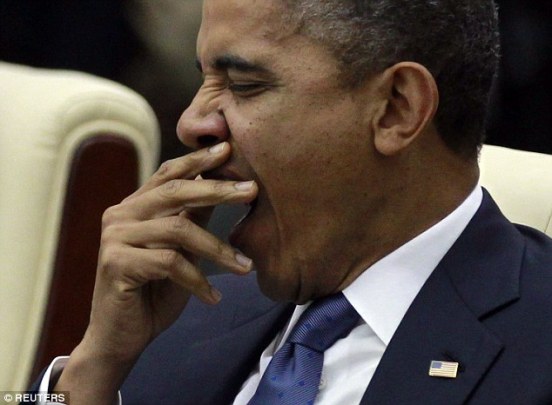
According to the TV show Mythbusters, yawning is in fact contagious due to stimulus that individuals acquire from group /social environments. This particular experiment tested the group level of analysis in Psychology by trying to control the act of yawning by placing individuals in a setting that was composed of outside influences.

A key method used in the experiment was to describe, explain, predict, and control. Also known as the goals of psychology, the testers aimed to describe how yawning was involuntary and the stimulus created from it invoked in others the act of yawning. They also explained that yawning can happen on an individual level but when done so around others it can provoke the same behavior. With fifty people tested, the researchers then predicted that yawning can be an involuntary contagious behavior. To test the possible theory of the contagiousness of yawning the experiment was controlled by a seeded yawn that was tested to discover if it would increase the behavior of yawning among a group of isolated but grouped individuals.

I would like to argue that the evidence found was in fact not supportive of their confirmation.  According to their findings the people who got no stimulus yawned 25% of the time while the people who received stimulus yawned 29% of the time. There’s undoubtedly an increase in the amount of yawning, however, it is not a significant increase. The myth busters confirmed that  yawning was contagious but from my standpoint this experiment does not support that theory in that it only shows a 4% increase in the number of yawning. However, to counter my argument a 4% increase in the amount of yawning could in fact be significant enough to confirm the theory of yawning being a contagious behavior.

Would anyone like to counter my argument?